
The Reasons Renovations Go Over Budget
In my experience, renovation budgets are often based on what a homeowner thinks the project might cost.
Sometimes that’s an educated guess using build costs per square metre, sometimes it comes from an early conversation with an architect or builder, and sometimes it’s a number that feels about right. Plans are drawn, quotes are received, and there’s often a sense that the overall cost is understood before work begins.
But as the project progresses, that number often changes. In most cases, this isn’t because of one major decision or a dishonest builder. It’s usually a series of smaller changes and adjustments that build over the length of the project.
When reviewing renovation projects at the planning stage, there are a few patterns I see regularly that are worth understanding early on.
The difference between an initial building estimate and the final cost is often where the details of the project becomes clearer.

Living room budgeted for an upgrade in flooring and bespoke joinery (see below).
1. The project grows over time
What begins as a defined renovation can gradually grow arms and legs.
For example:
adding additional joinery or built-in storage
upgrading finishes from the initially specified ones in the quote
extending work into other rooms (“while you’re here, could we also…”)
adjusting layouts once building work begins
Each individual decision (and the associated cost) often feels reasonable, but by the end of the project they can significantly increase the overall cost.
Taking time early on to clearly define what is included as well as what isn’t helps keep the project focused and budget expectations realistic.
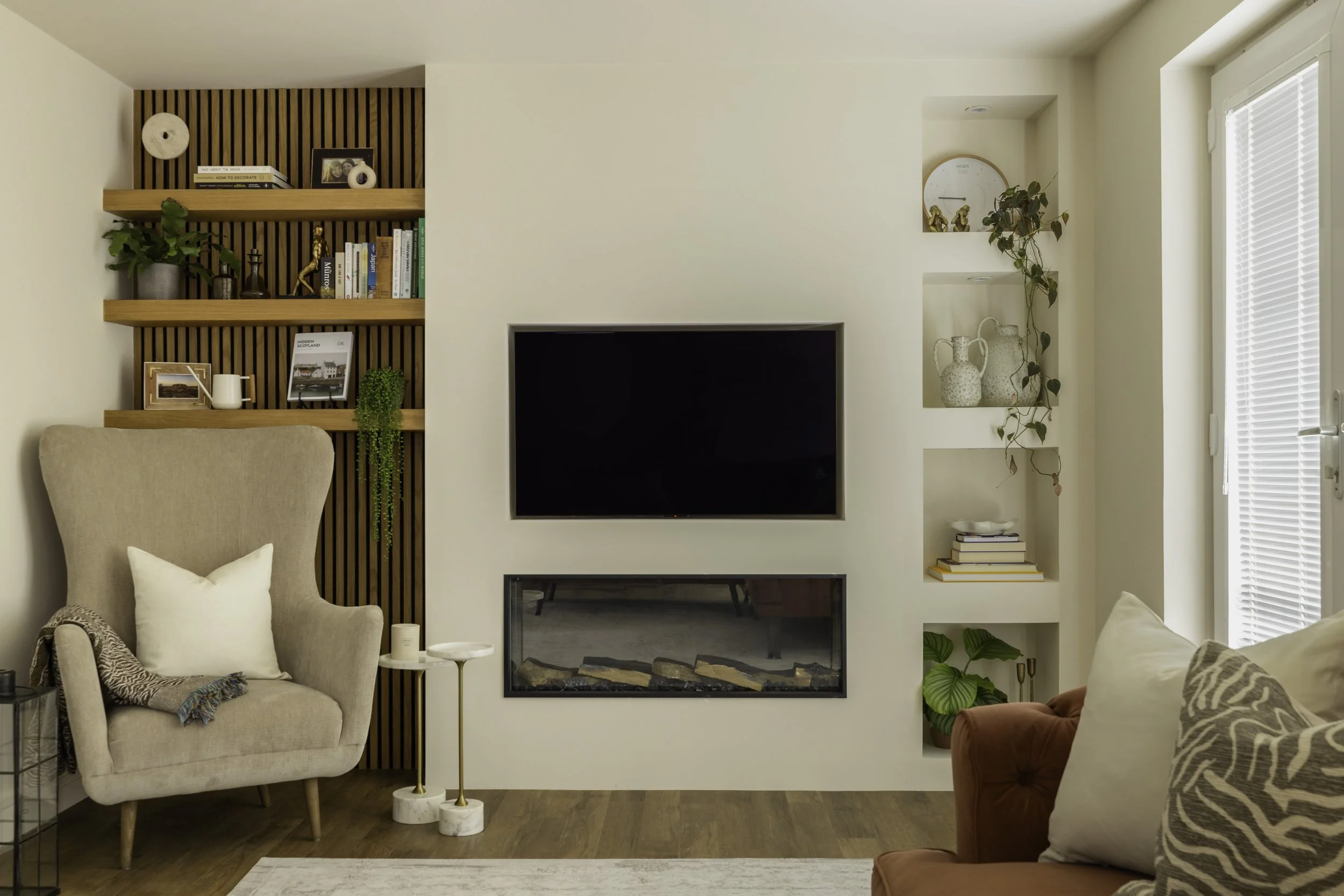
Bespoke joinery with built-ins hosting a tv and gas fire insert.
2. Unforeseen issues once work begins
This is a big one and I’ve never been on a project when something unexpected doesn’t come up. Older homes in particular usually have more of this.
This might include:
structural or timber repairs
outdated wiring or plumbing
damp or insulation issues
These are often unavoidable and usually difficult to predict fully at the early stages.
Allowing for some flexibility in the budget (often more than the typical 10%, especially in an older home) helps absorb these types of changes without unnecessary stress.
3. Decisions made later than expected
Many homeowners expect to make big decisions slowly over the length of the project.
In reality, once building begins, decisions often need to be made quickly.
This can include:
kitchen layouts and specifications
bathroom layouts and fittings
lighting and electrical details
flooring and other hard finishes
When decisions are made under time pressure, it can lead to:
choosing more expensive options
changes to previously agreed work
delays that affect cost
Thinking through these decisions well before the building works starts can help everything run more smoothly. I like to give myself and my clients at least 8 weeks prior to breaking ground to make these types of decisions.
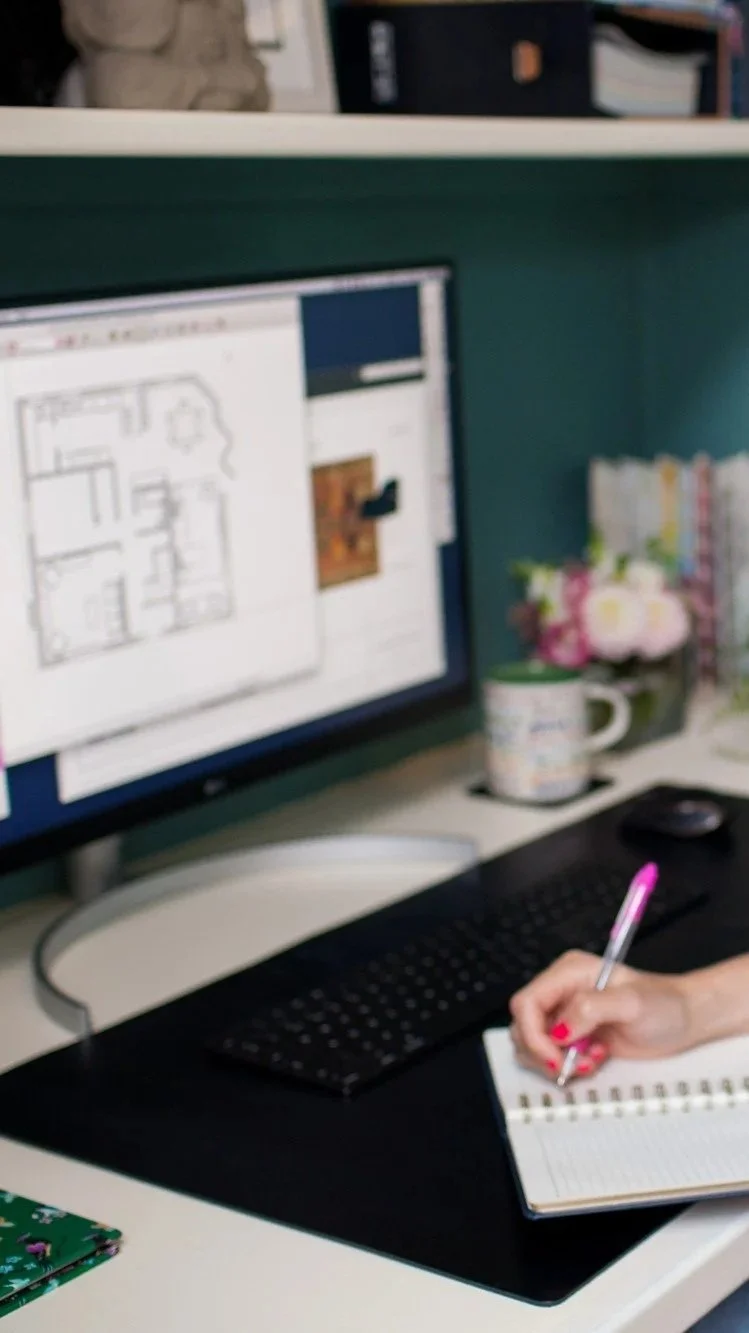
Review your layouts early on to make sure it will work for your everyday life.
4. Material choices and cost changes
Material costs can vary more than expected.
This can be due to:
availability
lead times
supplier changes
upgrades made during the project
Even small upgrades; for example, switching from standard white plastic sockets to antique brass plates, can add up when repeated throughout a home.
Reviewing material choices early and understanding what is included (and what might cost more) helps manage budget expectations. Allowing a contingency for materials to increase in price during the build will also help.
5. No (or very little) contingency built into the budget
One of the most common reasons budgets feel under pressure is simply that no contingency has been allowed for.
A contingency isn’t about expecting something to go wrong, although that happens, it’s about allowing space for the unknown.
This might include:
unpredictable site conditions
small design changes once spaces start to take shape
upgrades or adjustments along the way
Without a contingency, even minor changes can feel like a really big deal.
Why this matters?
Most renovations don’t go over budget because of one big thing. More often, it’s a series of reasonable decisions made throughout the project.
Understanding this early allows you to plan more realistically and move forward with greater confidence.
If you're at the stage where plans are in place and builder pricing is underway, this is often the point where a careful review of the layout, decisions and overall approach can make a meaningful difference.
Planning a renovation?
If you’d value an experienced second perspective before building begins, you’re welcome to schedule a short call to discuss your project.
